Who will love it
Price from: €19.50 Duration: 1–1.5 hours Best time: Weekdays from 16:00 to 18:00 Booking required: Yes District: Centrum

Price from: €19.50 Duration: 1–1.5 hours Best time: Weekdays from 16:00 to 18:00 Booking required: Yes District: Centrum
Art enthusiasts, history buffs, and those interested in the daily life of Golden Age Amsterdam should prioritize this museum. Unlike the massive Rijksmuseum, it offers an intimate, domestic look at Rembrandt's personal life, his art collection, and the actual studio where he painted his masterpieces.
A meticulously restored 17th-century townhouse where Rembrandt lived and worked, focusing on his creative process and daily life.
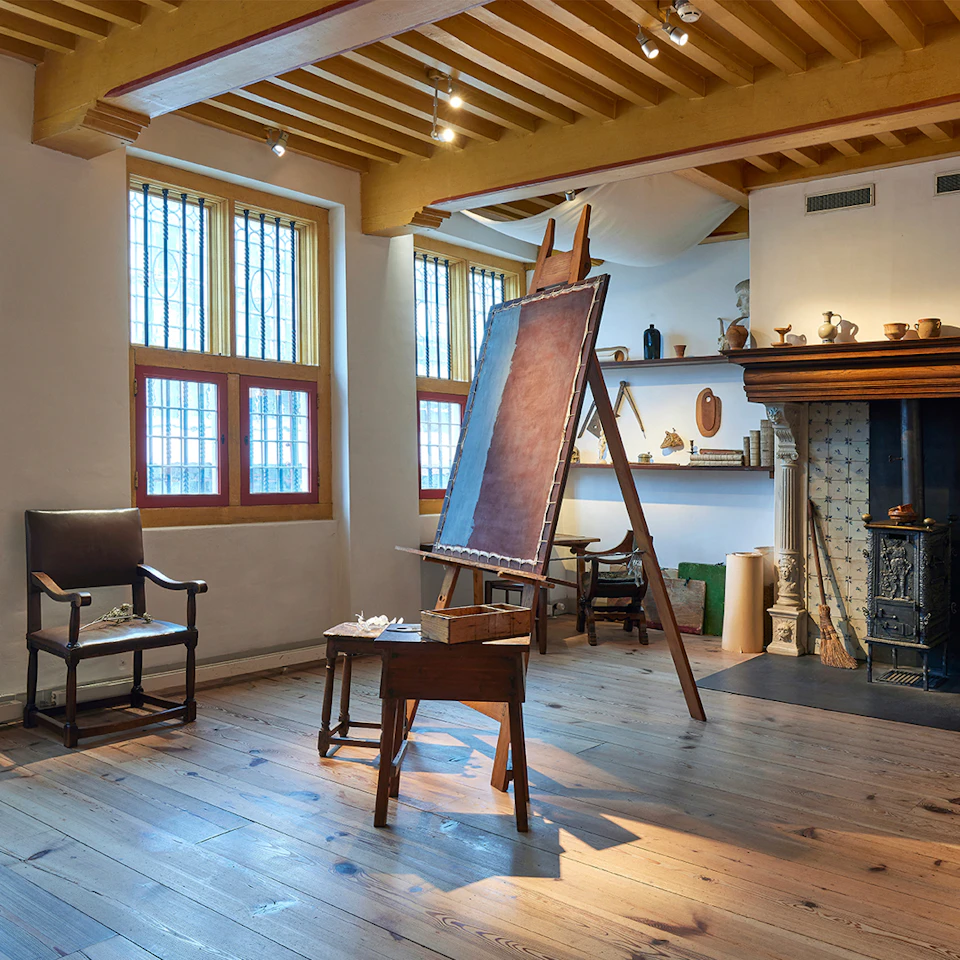
The museum excels at showing the technical reality of a 17th-century artist's life through live etching and pigment-mixing demonstrations. These sessions provide a tactile connection to Rembrandt’s process that finished gallery pieces cannot convey.
Keep in mind that the house features original, steep, and narrow staircases; while there is a modern lift in the new wing, the most atmospheric rooms require some climbing.
This site is essential for those who value the intimate history of the Dutch Golden Age and the "how" of art production. However, if your primary goal is to see his massive, world-famous oil canvases, you may find the collection of etchings and sketches here less impactful than the displays at the Rijksmuseum.
Don't skip the small office where Rembrandt kept his Cabinet of Curiosities—it offers a fascinating look into his personal inspirations.
Visit on a weekday morning immediately upon opening to experience the studio demonstrations before the narrow rooms become crowded.
Adult tickets cost 19.50 EUR, which includes a high-quality audio guide. Entry is free for Museumkaart holders and children under 6.
Allow 75 to 90 minutes to fully explore the house and watch at least one technical demonstration.
The standard admission ticket is the primary option for almost all visitors. It includes access to all restored rooms of the 17th-century townhouse, the modern museum wing, and a highly detailed multimedia audio guide available in multiple languages.
There is no need to pay extra for fast-track or VIP tickets, as entry is managed strictly by timed entry slots to prevent overcrowding inside the historic rooms.
A common mistake is assuming you can buy a ticket at the door without a pre-booked time slot. While the ticket desk does sell entries, they frequently sell out during peak hours, meaning you might have to wait hours for the next available slot or be turned away. Always book your specific entry time online in advance to guarantee your spot.
The museum is housed in a narrow, multi-story 17th-century canal house with steep, winding staircases. Because of the building's historic layout, it can feel cramped very quickly when tour groups or crowds arrive. The quietest times to visit are early in the morning right at opening (10:00) or late in the afternoon after 16:00.
For the best experience, aim for the late afternoon. Not only does the museum offer a discounted off-peak ticket rate for the 16:00 to 18:00 window, but the crowds thin out significantly, giving you more space to watch the live etching and paint-making demonstrations.
Solo travelers and photographers will appreciate the quieter afternoon light filtering through the studio windows.
If you plan to explore multiple cultural sites in Amsterdam, the museum is fully covered by the I amsterdam City Card and the Dutch Museumkaart. Both passes grant free entry, but you must still reserve a free time-slot ticket online in advance to secure your entry window.
For those looking to combine activities, booking a combo ticket that pairs the museum with a classic canal cruise or a nearby attraction like Madame Tussauds is a practical way to save on total costs.
Additionally, children under the age of six enter for free, while youth up to 25 and students with a valid ISIC card receive a significant discount on standard admission.
*Tip:* If you are visiting on a budget and do not have a city pass, book the off-peak ticket slot between 16:00 and 18:00. This simple choice lowers the adult ticket price from the standard €23.50 to €19.50.
For most visitors, a formal guided tour is not necessary. The complimentary multimedia guide included with every ticket is exceptionally detailed, walking you through Rembrandt’s life, financial troubles, and artistic process room by room.
The museum also features staff members who run continuous, live demonstrations of 17th-century paint preparation and etching printing, which are interactive and open to all ticket holders.
A private guided tour is only worth the extra cost if you are traveling in a group, have a deep interest in art history, or want to ask specific questions about Rembrandt's techniques. Otherwise, exploring at your own pace with the provided audio guide offers a highly personal and satisfying experience.
Crowds are strictly managed via timed-entry tickets, but the historic rooms feel cramped during peak midday hours.
Mini-calculator based on crowd levels by day and time.
This day has average visitor density. This slot has a higher chance of a comfortable visit: Quiet before closing.
Jodenbreestraat 4, 1011 NK Amsterdam
Nieuwmarkt (Exit Hoogstraat)
Centrum
The Rembrandt House Museum is the former home and studio of the Dutch master, meticulously restored to its 17th-century appearance. The complex includes the original historic residence and a modern wing dedicated to his extensive collection of etchings and temporary exhibitions.
The entrance is located in the modern glass-fronted building at Jodenbreestraat 4, situated directly to the left of the historic house with the prominent red shutters. Do not try to enter through the green door of the old house itself, as this is used only as an exit.
Once inside the modern wing, proceed directly to the ticket desk to have your digital or printed pass scanned.
Time is most often lost at the mandatory cloakroom. For safety and conservation reasons, all backpacks, large bags, and umbrellas must be stored in the lockers provided. These lockers require a 0.50 EUR or 1 EUR coin as a deposit, which is returned to you when you finish your visit. If you do not have a coin, the reception desk can provide a token.
The museum consists of two parts: a modern wing and the original 17th-century house where Rembrandt lived. While the modern section is fully accessible, the historic house features exceptionally steep, narrow winding stairs that are characteristic of old Amsterdam.
If you have mobility issues, use the lift in the new wing to access different levels, though some small mezzanine areas in the old house remain reachable only by stairs.
Expect a cozy but cramped environment. The rooms are small, and the museum limits the number of visitors per time slot to prevent overcrowding. Because of the fragile nature of the 400-year-old floorboards and furniture, you must follow a one-way walking route.
There is no specific dress code, but comfortable shoes are essential for navigating the uneven historic flooring.
Free lockers are located in the basement of the modern wing. These operate with a 1 EUR coin which is returned after use, or via a digital code system. These lockers are designed for small personal items and standard daypacks; the museum cannot accommodate large suitcases or travel luggage.
If you arrive with heavy baggage, you will need to use a commercial luggage storage service at Amsterdam Centraal Station, which is a 15-minute walk away.
Strollers and prams are not permitted inside the narrow rooms of the historic house due to space constraints and safety regulations. You must leave them in the designated buggy park near the entrance. Small baby carriers are allowed and recommended for those visiting with infants.
Start your morning browsing the vintage stalls at Waterlooplein Market before heading into the Rembrandt House Museum. After exploring the artist's studio, walk to the Portuguese Synagogue to see the neighborhood's grandest historic interior.
For lunch, grab a fresh quiche at De Laatste Kruimel, then spend the afternoon at the H'ART Museum or take a short metro ride to the Rijksmuseum to see Rembrandt's final works.
In 1639, at the height of his fame and financial success, Rembrandt van Rijn purchased this grand townhouse on Jodenbreestraat. The property served not only as his family home but also as a bustling print workshop, a painting studio, and a gallery for his massive art collection.
However, his lavish spending on art, exotic curiosities, and antiquities eventually led to his financial ruin, resulting in a declaration of insolvency in 1656.
The artist's misfortune became a vital asset for modern restoration. When Rembrandt went bankrupt, city officials compiled a highly detailed inventory of everything inside the house to auction off his belongings.
This historical document, along with Rembrandt's own sketches of his home, allowed historians to meticulously reconstruct the rooms, matching the exact layout, furniture, and art pieces he owned.
Today, the museum offers visitors a rare, authentic glimpse into the daily life of a 17th-century master. Rather than viewing paintings on sterile gallery walls, you step directly into the spaces where his masterpieces were conceived, exploring his pigment-mixing studio, his etching workshop, and his cabinet of curiosities.
Partially accessible; modern wing is step-free, historic house has lift access to major floors.
Yes; free for children under 6, reduced rates for youth, and interactive art demonstrations.
The Rembrandt House Museum is accessible to wheelchair users through a combination of the modern wing and a specialized lift in the historic house. The entrance, shop, and modern galleries are fully step-free.
In the historic 17th-century house, the lift provides access to the primary floors, including Rembrandt’s studio and the old kitchen. However, small mezzanine levels and the original narrow spiral staircases are not wheelchair-accessible.
A standard-sized wheelchair is available for loan at the cloakroom for visitors who require one.
Myth: The 17th-century house is completely off-limits to wheelchair users due to its age. Reality: While the original stairs are too narrow for mobility aids, a modern lift system allows visitors to reach the most significant exhibition spaces and the artist's workplace.
Strollers and large prams are not permitted inside the historic rooms because of the narrow 17th-century corridors and fragile flooring. They must be parked in the supervised cloakroom area near the entrance. For those visiting with infants, using a front-carrier is the most practical way to navigate the house.
Children under 6 years old receive free entry, while visitors aged 6 to 17 pay a reduced rate of 6 EUR. All guests under the age of 16 must be accompanied by an adult.
The historic section features exceptionally steep and narrow 'Dutch' stairs that are challenging for visitors with reduced mobility. It is recommended to use the elevator in the modern wing to transition between levels.
The museum is highly engaging for children due to daily live demonstrations of etching and paint-mixing techniques, though the rooms can become cramped during peak afternoon hours, making it difficult to move through with a large family group.
The museum facilities are primarily located in the modern wing adjacent to the historic house to ensure the preservation of the 17th-century rooms.
* Restrooms: Free toilets are located in the basement of the modern wing. This area includes an accessible restroom and a baby-changing station.
* Gift Shop: Located on the ground floor, the shop offers a specialized selection of etching materials, copper plates, and professional art supplies, alongside Rembrandt-themed books and high-quality prints. * Lockers: Free digital lockers are provided in the basement.
Visitors are required to store all backpacks, large bags, and umbrellas here, as they are not permitted inside the narrow corridors of the historic residence. * Wi-Fi and Refreshments: Free Wi-Fi is available throughout the modern annex.
While there is no full-service restaurant on-site, a small coffee corner with a seating area provides basic refreshments. Note that food and drink are strictly prohibited within the historic house itself.